
Home > Products > Anti-static Floor > All Steel Anti-static Ventilation Floor > Anti-static HPL Raised Floor
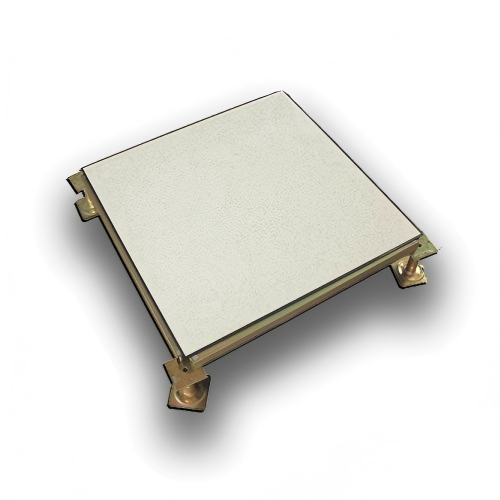
Anti-static HPL Raised Floor
The Anti-static HPL Raised Floor from Huahong combines a premium high-pressure laminate (HPL) surface with a high-density foamed cement core. This permanent static-dissipative flooring (1×10⁶–1×10⁹ Ω) provides outstanding wear resistance, Class A fire safety, and heavy load capacity up to 1134 kg (FS2500). Designed to prevent ESD damage and eliminate floor sagging, it offers quick underfloor access for cables. Ideal for data centers, server rooms, and electronic manufacturing facilities. Get a factory-direct OEM/ODM quote within 24 hours.
Send Inquiry
Product Description
| How to Select the Right Anti-static HPL Raised Floor for Your Facility |
Modern data centers and electronic manufacturing facilities require flooring that actively prevents electrostatic discharge (ESD) while providing reliable underfloor access. The Anti-static HPL Raised Floor from Huahong combines a premium high-pressure laminate (HPL) surface with a high-density foamed cement core, delivering permanent static control and heavy-duty load capacity. This guide outlines the technical specifications, performance advantages, and selection criteria to assist procurement engineers.
|
Max Load Capacity Up to 1134 kg Concentrated load (FS2500 model) |
ESD Protection 1×10⁶–1×10⁹ Ω Permanent static-dissipative surface |
|
Surface Material Premium HPL High wear and impact resistance |
Core & Safety Steel-Cement Core Class A fire rating, anti-sagging |
Permanent ESD Protection & Surface Durability
Unlike painted steel floors that require regular maintenance coatings, the Anti-static HPL Raised Floor uses built-in static control. The HPL surface is manufactured with conductive fibers, ensuring that static charge safely travels from the surface through the panel to the grounded pedestal system. This provides continuous protection without the need for waxes or sprays, maintaining its 10⁶ to 10⁹ Ω resistivity throughout its 15+ year lifespan.
The HPL surface is bonded to the steel substrate using high-temperature, high-pressure lamination. This creates an exceptionally strong chemical and mechanical bond that resists peeling, even in humid or coastal environments. Additionally, the HPL layer is highly resistant to daily wear from rolling chairs, equipment moves, and scratches, while providing a Class A fire rating.
Load Capacity Models & Selection Guide
All models share the standard 600×600×35mm footprint and meet or exceed GB/T 36340-2018 and SJ/T 10796-2001 standards. The steel-encased foamed cement core provides high rigidity, preventing sagging or creep under permanent heavy loads. Choose the appropriate model based on your heaviest equipment:
| Model | Concentrated Load | Ultimate Load | Recommended Application |
|---|---|---|---|
| FS662 | 3.56 KN (363 KG) | 11.25 KN | General office walkways |
| FS800 | 4.45 KN (454 KG) | 14.50 KN | Light server racks |
| FS1250 | 5.56 KN (567 KG) | 18.36 KN | Standard data center racks |
| FS1500 | 6.68 KN (680 KG) | 22.17 KN | Standard data center racks |
| FS2000 | 8.89 KN (907 KG) | 29.42 KN | Heavy UPS, battery cabinets |
| FS2500 | 11.11 KN (1134 KG) | 37.34 KN | Mainframe, storage arrays |
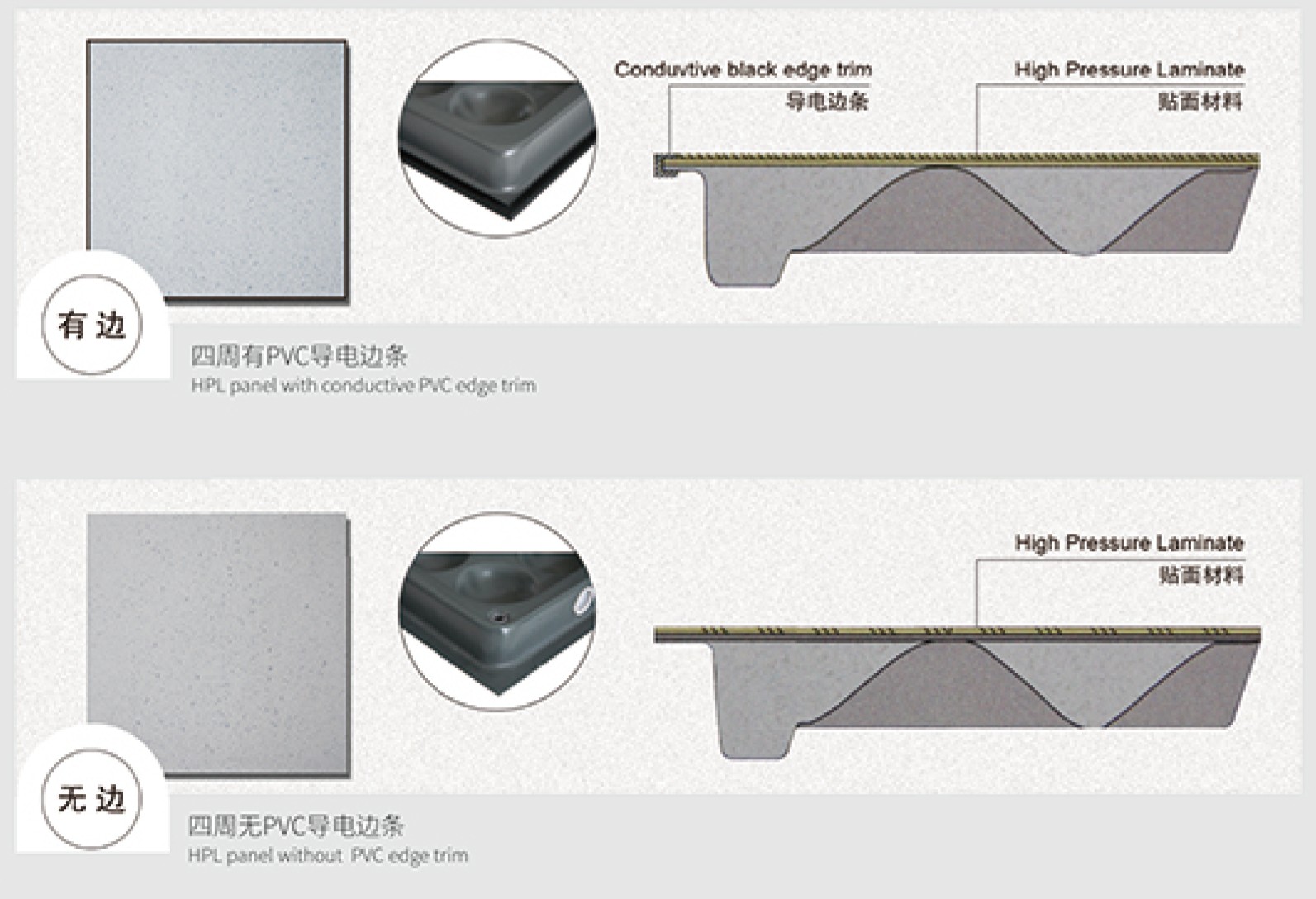
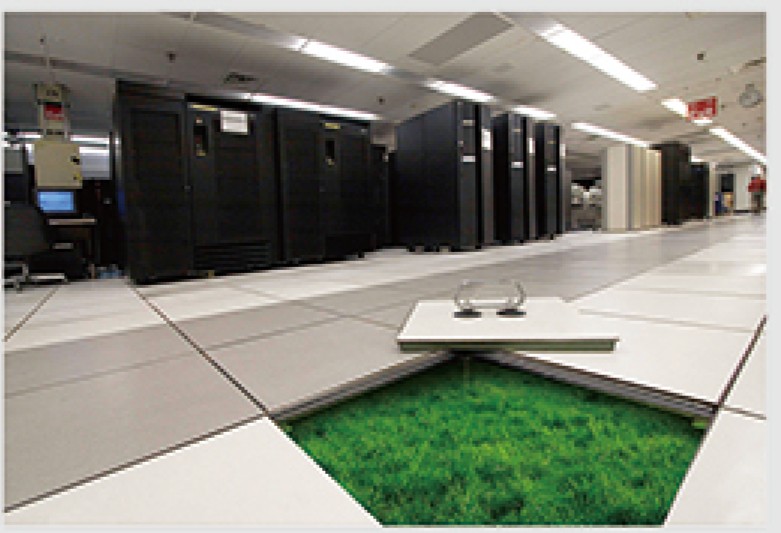

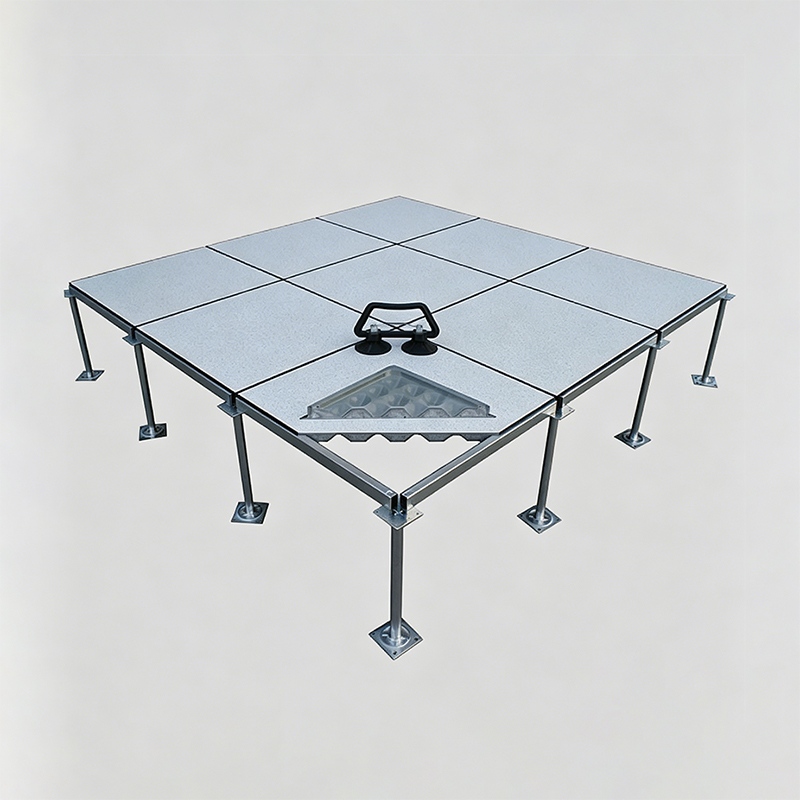
Anti-static HPL Raised Floor details and construction.
Installation, Customization, and Factory-Direct Support
The modular design allows for rapid installation and easy reconfiguration. Individual panels can be lifted with a suction tool to access underfloor power, data, and cooling lines without construction dust or downtime. Huahong supports full customization, including standard or custom HPL colors (light gray, dark gray, etc.), non-standard sizes for unique layouts, and optional seismic stringers for lateral stability.
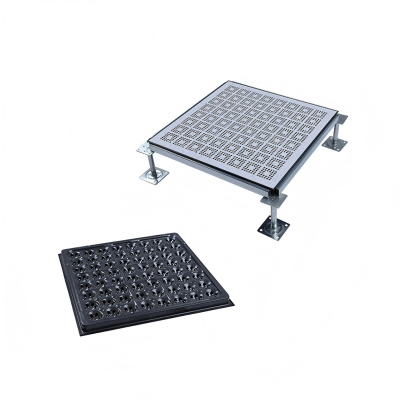
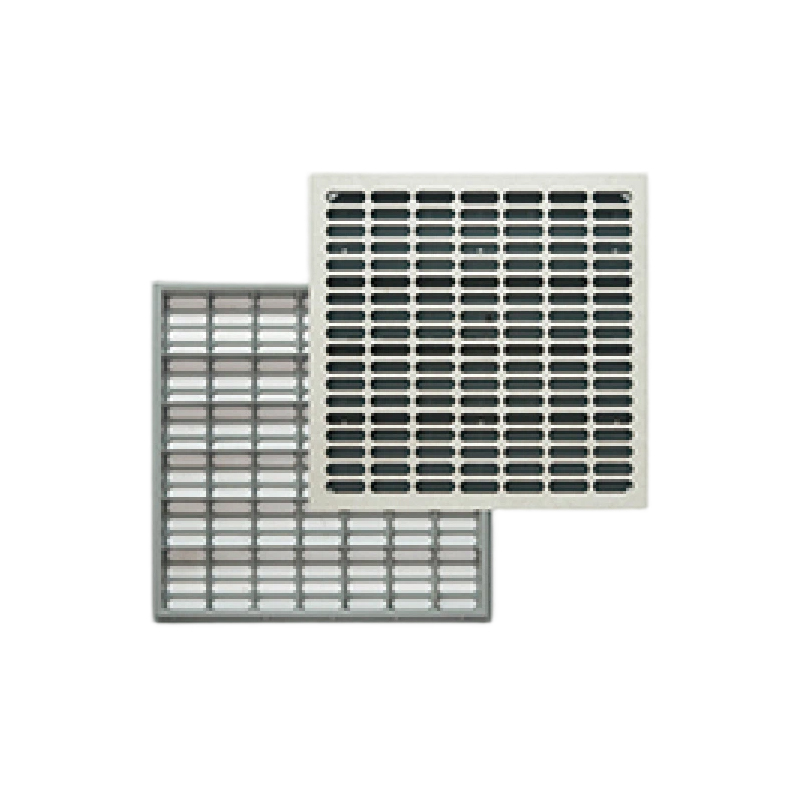
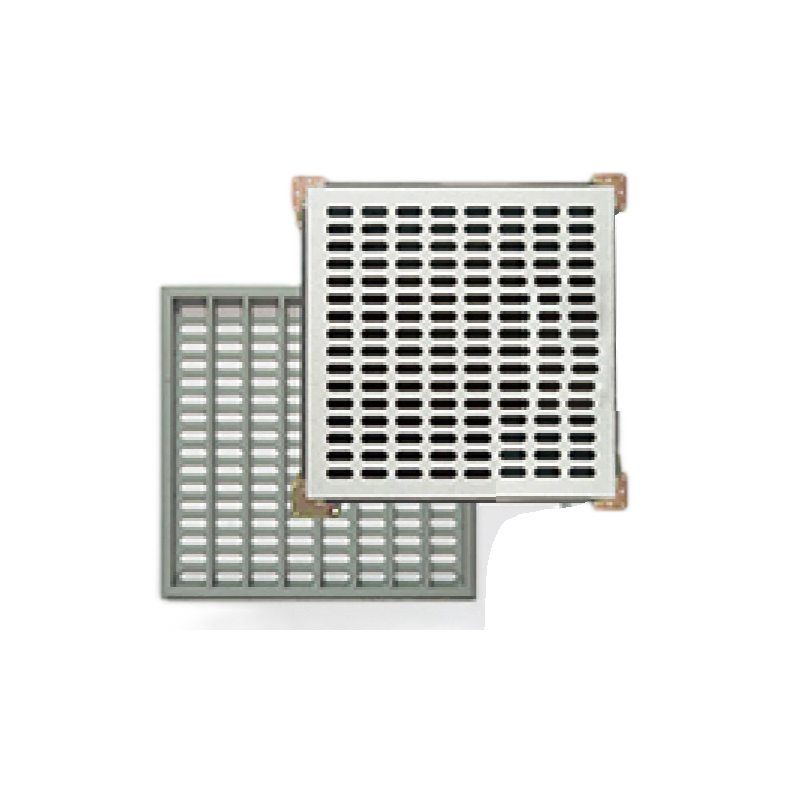
For projects requiring different core materials or airflow management, explore our Steel Cementitious Raised Floor or All Steel Anti-static Ventilation Floor. If your facility requires high-strength panels for specialized environments, our Calcium Sulfate Anti-static Floor offers an excellent alternative.
【Anti-static HPL Raised Floor】FAQ
|
Q: How does the 【Anti-static HPL Raised Floor】 maintain its static-dissipative properties over time? A: The anti-static property is built directly into the HPL (High-Pressure Laminate) during the manufacturing process using conductive fibers, rather than applied as a temporary surface coating. This means it will not wear off with foot traffic, rolling chairs, or cleaning. The system maintains a stable resistivity of 1×10⁶ to 1×10⁹ Ω permanently. You never need to apply anti-static waxes or sprays, significantly reducing long-term maintenance costs. |
|
Q: Can the HPL surface peel off if the 【Anti-static HPL Raised Floor】 is installed in a humid environment? A: No. We use a high-temperature, high-pressure lamination process to bond the HPL sheet to the steel substrate. This creates an extremely strong, water-resistant chemical and mechanical bond. Unlike lower-quality floors that use cold adhesives and may experience edge lifting in humid conditions, our HPL panels are designed to resist delamination. For extreme coastal or tropical environments, we offer sealed-edge panel options for additional moisture protection. |
|
Q: How do I choose the correct load model for the 【Anti-static HPL Raised Floor】 in a high-density data center? A: In a high-density data center, you must calculate the concentrated point load of fully populated server racks, not just the average room load. For standard racks, FS800 (363 kg) or FS1250 (567 kg) is usually sufficient. However, if you are installing heavy UPS systems, battery cabinets, or mainframes, you should specify FS2000 (907 kg) or FS2500 (1134 kg). We highly recommend sharing your heaviest rack's weight during the RFQ stage so our engineers can confirm the exact model to prevent panel sagging. |
Related Category
All Steel Anti-static Activity Floor
Borderless All Steel Anti-Static Raised Floor
All Steel Anti-static Ventilation Floor
Calcium Sulfate Anti-static Floor
Send Inquiry
Please Feel free to give your inquiry in the form below. We will reply you in 24 hours.