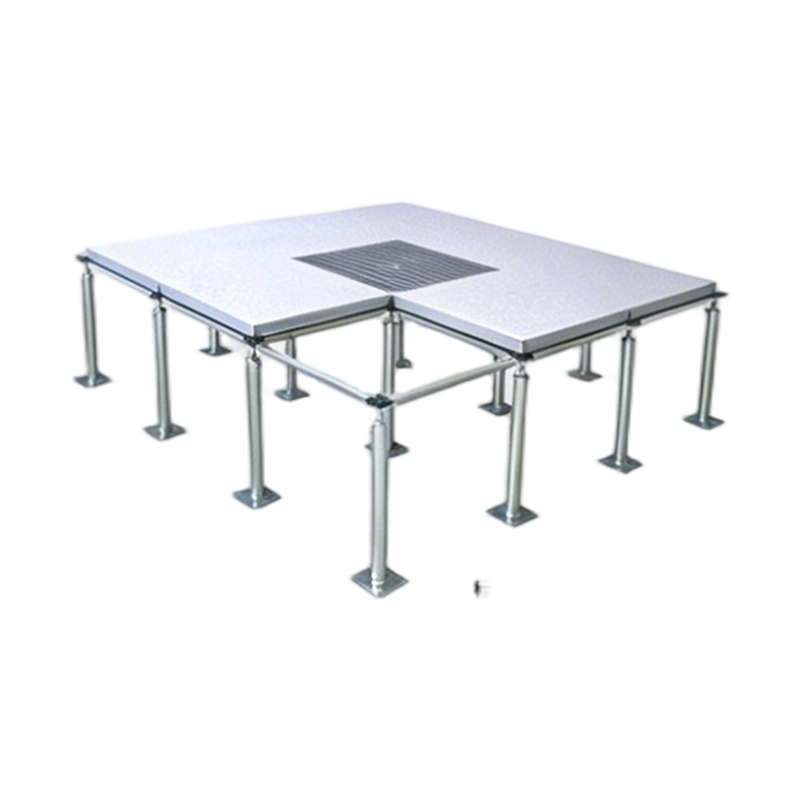

Home > Products > Aluminum Alloy Anti-static Floor > Aluminum Alloy Frame Empty Anti-static Activity Floor > Aluminum Perforated Panel

Aluminum Perforated Panel
Maximize cooling efficiency with 【Huahong Floor】 【Aluminum Perforated Panel】. Lightweight, rust-proof, and precision-punched for optimal airflow in data centers and server rooms. Reduces hot spots and cuts energy costs without sacrificing strength. Ideal for IT teams demanding performance and reliability. Keep equipment cool and bills low. Choose Huahong Floor for smarter airflow.
Send Inquiry
Product Description
High-density servers generate massive heat. Without proper airflow, equipment throttles, hot spots develop, and reliability fails. The Aluminum Perforated Panel from Huahong Floor delivers the solution. Precision-machined from high-quality aluminum alloy, this perforated raised floor panel combines high load capacity with efficient ventilation. Permanent anti-static, corrosion-resistant, and uniformly cooled – it is the professional choice for data centers and high-heat equipment rooms.
What Is an Aluminum Perforated Panel?
An Aluminum Perforated Panel is a raised access floor panel made from aluminum alloy with precision-engineered holes across its surface. Unlike steel perforated panels that can rust, aluminum provides natural corrosion resistance. Unlike solid panels, the perforation pattern allows cooling air to rise from the underfloor plenum directly to server intakes.
Product Definition & Core Functions
- Definition: An aluminum alloy raised floor panel with precision perforations for ventilation
- Primary Function: Deliver cooling air to high-heat equipment while providing load-bearing support
- Additional Functions: Cable management under raised floor, anti-static protection, equipment support
Panel Construction
|
Component |
Material |
Feature |
|
Base material |
High-quality aluminum alloy |
Lightweight, high strength |
|
Forming method |
Precision stamping and perforation |
Uniform hole distribution |
|
Structure |
Solid aluminum (no fillers) |
Permanent anti-static, no rust |
|
Surface finish |
Natural aluminum (no coating needed) |
Maintenance-free, corrosion resistant |
|
Edge finish |
Precision machined |
Clean, uniform appearance |
|
Support system |
Adjustable pedestals |
Standard 600×600mm grid |
Manufacturing Process
- Material: High-quality aluminum alloy sheet
- Perforation: High-precision stamping process – uniform hole pattern
- Deburring: All holes smoothed – no sharp edges
- Flatness: Precision leveling after perforation
- Finish: Natural aluminum – no painting, no coating required
Dual Brand Quality Control
Both Huahong and Ouli brands follow strict production standards. Every panel undergoes perforation uniformity inspection, flatness testing, load verification, and corrosion resistance validation before packing.
Technical Specifications
Basic Parameters
|
Parameter |
Specification |
|
Product Name |
Aluminum Perforated Panel |
|
Material |
High-quality aluminum alloy |
|
Perforation method |
High-precision stamping |
|
Panel size |
600 × 600 mm (standard) |
|
Panel thickness |
35 mm (customizable) |
|
Ventilation rate |
30% – 60% (customizable) |
|
Hole pattern |
Uniform distribution – no dead spots |
|
Surface finish |
Natural aluminum (no coating) |
|
Edge finish |
Precision machined, burr-free |
Load Capacity Options
|
Model |
Concentrated Load |
Uniform Load |
Best For |
|
FS800 |
454 KG |
22.22 KN/m² |
Standard server rooms |
|
FS1250 |
567 KG |
27.78 KN/m² |
Medium density data centers |
|
FS1500 |
680 KG |
33.34 KN/m² |
High-density racks |
|
FS2000 |
907 KG |
44.45 KN/m² |
Heavy equipment, UPS rooms |
Ventilation Specifications
|
Ventilation Rate |
Hole Diameter |
Pattern Density |
Typical Use |
|
30% |
Small |
Moderate |
Low heat load areas |
|
40% |
Medium |
Balanced |
Standard server rooms |
|
50% |
Large |
Dense |
High heat load zones |
|
60% |
Largest |
Maximum |
High-density computing, hot aisles |
Physical & Environmental Properties
|
Property |
Performance |
Benefit |
|
Corrosion resistance |
Excellent (natural oxide layer) |
No rust – perfect for humid environments |
|
Anti-static |
Permanent (aluminum is conductive) |
No coating to wear off |
|
Fire resistance |
Class A (non-combustible) |
Safe for all building codes |
|
Weight |
Light (approx. 1/3 of steel) |
Easy to install and handle |
|
Flatness |
High – precision leveled |
Smooth walking surface |
|
Dimensional stability |
Excellent |
No warping or deformation |
|
Service life |
30+ years, maintenance-free |
Lowest life-cycle cost |
Perforation Quality Features
- Uniform hole distribution – No dead spots, consistent airflow across entire panel
- Burr-free holes – Safe for handling, no damage to cables or hands
- Precision alignment – Holes align with standard grid patterns
- No edge fraying – Clean cut around panel perimeter
Core Advantages of Aluminum Perforated Panel
1. High-Efficiency Ventilation – Uniform Cooling
- Precision perforation pattern ensures even airflow distribution
- No dead spots – every server intake receives cooling air
- Customizable ventilation rate (30%-60%) for specific heat loads
- Reduces hot spots and improves equipment reliability
2. Strong Load Capacity – Supports Heavy Equipment
- High-strength aluminum alloy construction
- FS800 to FS2000 models available (454 KG to 907 KG concentrated load)
- Supports server racks, UPS units, and heavy equipment
- No deformation under load – stable and reliable
3. Permanent Anti-Static – No Coating Required
- Aluminum is naturally conductive
- No anti-static coating to wear off or reapply
- Surface resistivity remains constant for life
- Safe for sensitive electronics forever
4. Complete Corrosion Resistance – Never Rusts
- Aluminum forms protective oxide layer naturally
- No painting, no plating, no sacrificial coatings needed
- Ideal for humid environments, coastal data centers
- No rust stains or degradation over time
5. Lightweight – Easy to Install and Maintain
- Approximately 1/3 the weight of steel panels
- Reduces worker fatigue during installation
- Easy to lift for underfloor cable access
- Lower shipping costs
6. Customizable Ventilation Rate
- 30% to 60% open area options
- Tailored to specific heat load requirements
- Prevents under-cooling or wasted airflow
- Optimizes CRAC fan efficiency
7. Fire and Heat Resistant
- Class A non-combustible – aluminum will not burn
- No smoke or toxic fumes in fire
- Maintains strength at elevated temperatures
- No deformation under heat stress
8. Precision Perforation – No Burrs, No Sharp Edges
- High-precision stamping process
- All holes deburred – smooth to touch
- No damage to cables or hands during installation
- Professional appearance
9. Maintenance-Free – No Coating, No Painting
- Natural aluminum surface requires no maintenance
- No rust removal, no repainting, no sealing
- Simple cleaning with damp cloth
- Lowest life-cycle cost of any perforated panel
Applications for Aluminum Perforated Panel
Primary Applications
- Data centers and server rooms – High-density cooling
- Cloud computing centers – Continuous high heat load
- IDC rooms – Internet data center standard
- Command and control centers – Reliable equipment cooling
- Electronics manufacturing – Static-safe, clean environment
- Laboratories – Chemical resistant, easy to clean
- High heat density equipment rooms – UPS, battery, mainframe
- Telecommunication facilities – Constant cooling demand
Who Needs This Product?
|
Role |
Why They Need Aluminum Perforated Panel |
|
Data center manager |
Uniform cooling, eliminate hot spots |
|
IT infrastructure lead |
Permanent anti-static, equipment protection |
|
Facility engineer |
Corrosion resistance in humid environments |
|
Data center designer |
Customizable ventilation, high load capacity |
|
Maintenance team |
Lightweight, easy to lift for cable access |
Comparison to Steel Perforated Panels
|
Feature |
Aluminum Perforated Panel |
Steel Perforated Panel |
|
Corrosion resistance |
Excellent (never rusts) |
Coating dependent (rusts if scratched) |
|
Weight |
Light (1/3 of steel) |
Heavy |
|
Anti-static |
Permanent (inherent) |
Coating dependent |
|
Maintenance |
None (no painting) |
Periodic coating inspection |
|
Service life |
30+ years |
10-15 years |
|
Best for |
Humid, coastal, clean environments |
General indoor use |
FAQ
Q1: Does the Aluminum Perforated Panel meet national and industry standards?
Answer: Yes. The Aluminum Perforated Panel from Huahong Floor strictly complies with GB/T 36340-2018 (raised access floors) and SJ/T 10796-2001 (anti-static floors). The aluminum alloy material meets applicable ASTM and EN standards. Perforation uniformity, load capacity, flatness, and anti-static properties are tested per batch. Fire rating is Class A non-combustible. Corrosion resistance is inherent to the aluminum material – no coating required. For international projects, Huahong can provide compliance documentation for ISO, ASTM, or EN standards upon request. Custom testing can be arranged for specialized applications.
Q2: Is the Aluminum Perforated Panel suitable for data center cooling?
Answer: Absolutely. The Aluminum Perforated Panel is specifically designed for high-heat environments like data centers, server rooms, and cloud computing centers. Here is why it excels. First, the precision perforation pattern ensures uniform airflow across the entire panel – no dead spots. Second, customizable ventilation rates (30%-60%) allow you to match cooling delivery to your specific rack heat loads. Third, the high load capacity (up to 907 KG concentrated) supports heavy server racks. Fourth, permanent anti-static protects sensitive electronics without coating maintenance. Fifth, corrosion resistance makes it ideal for humid environments or coastal data centers. For hot aisle/cold aisle containment systems, aluminum perforated panels in front of racks deliver targeted cooling that reduces bypass airflow and lowers energy costs.
Q3: Can the ventilation rate be customized for my specific project?
Answer: Yes. Huahong Floor supports customizable ventilation rates from 30% to 60% for the Aluminum Perforated Panel. You specify the exact open area percentage needed for your cooling design. Standard patterns include uniform hole distribution across the entire panel, high-density perforation zones for targeted cooling, and edge-to-edge perforation for maximum airflow. For large projects, custom hole diameters and spacing patterns are available. Provide your required CFM per panel or target open area percentage, and Huahong will manufacture accordingly. This customization ensures you neither under-ventilate (causing hot spots) nor over-ventilate (wasting cold air and energy). Contact Huahong with your cooling requirements for a recommendation.
Q4: Will the Aluminum Perforated Panel rust or corrode over time?
Answer: No. The Aluminum Perforated Panel never rusts. Aluminum naturally forms a thin, transparent oxide layer when exposed to air. This layer is hard, non-porous, and self-healing – if scratched, the oxide immediately reforms. No painting, plating, or sealing is required. For coastal data centers, high-humidity environments, or any facility where steel panels would rust at cut edges or scratches, aluminum perforated panels maintain their integrity indefinitely. Steel perforated panels rely on paint or coating systems that eventually fail – especially at perforation edges where holes are cut. Aluminum has no such weakness. This corrosion resistance is one of the primary reasons engineers specify aluminum for harsh or humid environments.
Q5: Is the panel strong enough for heavy server racks?
Answer: Yes. The Aluminum Perforated Panel is manufactured from high-strength aluminum alloy with load capacities matching or exceeding steel perforated panels. Available models: FS800 (454 KG) – Standard server rooms, light racks. FS1250 (567 KG) – Medium density data centers. FS1500 (680 KG) – High-density racks. FS2000 (907 KG) – Heavy UPS equipment, large mainframes. The solid aluminum construction (no fillers, no hollow cavities) distributes point loads evenly without risk of core crushing. For most standard server racks with foot loads of 200-300 KG, FS800 or FS1250 models are sufficient. For heavy equipment, select FS1500 or FS2000. Despite the perforations, the panel maintains full structural integrity because the aluminum web between holes provides continuous load path.
Q6: How does the Aluminum Perforated Panel compare to steel perforated panels?
Answer: Five key advantages make aluminum superior for most applications. First, corrosion resistance – Aluminum never rusts; steel rusts when coating is scratched (especially at perforation edges). Second, weight – Aluminum is 1/3 the weight of steel, making installation and cable access easier. Third, anti-static – Aluminum is naturally conductive permanently; steel requires coatings that wear off. Fourth, maintenance – Aluminum requires none; steel needs periodic coating inspection and touch-up. Fifth, service life – Aluminum lasts 30+ years; steel typically 10-15 years before rust appears. The only potential disadvantage is cost – aluminum has higher initial material cost. However, the longer service life and zero maintenance make aluminum more economical over the full building lifecycle.
Q7: Does Huahong Floor provide customization and after-sales support?
Answer: Yes. Huahong Floor provides comprehensive support for the Aluminum Perforated Panel. Customization options include: ventilation rate (30%-60% open area), panel thickness (35mm or custom), load rating (FS800 to FS2000+), panel size (600×600mm standard or custom dimensions), and hole pattern (uniform or zoned). Installation services include: on-site measurement, system design, professional installation by trained crews, and post-installation airflow verification. Warranty : 5-year structural warranty covering material defects, load performance, and perforation integrity. After-sales support : technical documentation, remote troubleshooting, replacement panels for verified defects, and optional on-site inspection for large projects. Contact Huahong with your specific requirements for a customized proposal.
Installation Overview
Standard Installation Steps
1. Clean and prepare the subfloor
2. Mark pedestal positions on 600×600mm grid
3. Install adjustable pedestals at design height
4. Install stringers for lateral stability if required
5. Place Aluminum Perforated Panels in cold aisle positions (in front of racks)
6. Place solid panels in hot aisle and walkways
7. Check flatness with 2m level
8. Install edge trim and access ramps
Placement Best Practices
- Cold aisle: Perforated panels directly in front of server rack intakes
- Hot aisle: Solid panels to contain exhaust air
- Under racks: Align perforated panels with server intake zones
- Walkways: Low ventilation (30%) or solid panels for comfort
Tools Required
- Laser level or rotating laser
- Suction cup panel lifter
- Measuring tape
- Multimeter for grounding test (if needed)
Maintenance Guidelines
Daily Care
- Dry mop or vacuum to remove dust
- Damp mop with mild soap and water as needed
- No wax, no polish, no anti-static sprays – not needed
Periodic Checks
- Every 6 months: Verify no debris blocking perforations
- Use compressed air from underside to clear any accumulated dust
- Check for any damage to panel edges (rare with aluminum)
No Coating Maintenance
- No painting, no rust removal, no sealing
- Natural aluminum surface requires no treatment
- Truly maintenance-free
Comparison – Aluminum Perforated vs. Steel Perforated
|
Feature |
Aluminum Perforated Panel |
Steel Perforated Panel |
|
Material |
High-quality aluminum alloy |
Cold-rolled steel |
|
Corrosion resistance |
Excellent (never rusts) |
Coating dependent (rusts at scratches) |
|
Weight |
Light (approx. 1/3 of steel) |
Heavy |
|
Anti-static |
Permanent (inherent) |
Coating dependent |
|
Perforation quality |
Precision, burr-free |
Variable |
|
Fire rating |
Class A |
Class A |
|
Maintenance |
None |
Periodic coating check |
|
Service life |
30+ years |
10-15 years |
|
Life-cycle cost |
Lowest |
Higher (due to replacement) |
|
Best for |
Humid, coastal, clean environments |
General indoor use |
Why Choose Huahong Floor Aluminum Perforated Panels
Manufacturing Excellence
- Material: High-quality aluminum alloy
- Perforation: High-precision stamping – uniform, burr-free
- Structure: Solid aluminum – no fillers, no coatings
- Flatness: Precision leveled after perforation
- Control: Huahong and Ouli dual brand standards
Performance Guarantees
- Ventilation rate: 30% to 60% as specified
- Load capacity: FS800 to FS2000+ models
- Flatness: Superior to steel alternatives
- Corrosion resistance: Never rusts
- Anti-static: Permanent – no coating
- Service life: 30+ years, maintenance-free
One-Stop Service
- Ventilation rate customization
- Load rating selection guidance
- System design and layout planning
- Material supply with delivery
- Professional installation (optional)
- 5-year warranty and technical support
Solutions to Common Customer Concerns
|
Concern |
Huahong Solution |
|
Uneven ventilation |
Precision perforation – uniform airflow, no dead spots |
|
Insufficient load capacity |
High-strength aluminum – FS800 to FS2000+ models |
|
Corrosion and rust |
Aluminum never rusts – perfect for humid environments |
|
Coating wear and static decay |
Permanent anti-static (inherent to aluminum) |
|
Heavy panels difficult to handle |
Lightweight (1/3 of steel) – easy to lift |
|
High maintenance costs |
Maintenance-free – no painting, no coating renewal |
|
Customization needed |
Ventilation rate, load rating, size all customizable |
Summary
The Aluminum Perforated Panel from Huahong Floor is the professional choice for data center cooling and high-heat environments. Precision perforation ensures uniform airflow – no dead spots, no hot spots. High-strength aluminum alloy provides load capacity up to 907 KG while weighing 1/3 of steel. Permanent anti-static – no coating to wear off. Never rusts – perfect for humid or coastal facilities. Customizable ventilation rate (30%-60%) matches specific heat loads. Class A fire rated. Maintenance-free – 30+ year service life.
Choose Aluminum Perforated Panel for efficient cooling, lasting strength, and zero corrosion.
Hot Tags: Aluminum Perforated Panel, China, Manufacturer, Supplier, Factory
Related Category
Send Inquiry
Please Feel free to give your inquiry in the form below. We will reply you in 24 hours.