

Is Your Steel Overhead Active Floor Compatible with Data Center Underfloor Air Distribution?
Steel Overhead Active Floor from Guangdong Huahong Raised Access Floor Co., Ltd. (OULI) fixes poor airflow causing data center overheating and unnecessary power waste. When a data center overheats, the blame rarely falls on the cooling system alone. Often, the real culprit is the floor beneath the racks. For facilities managers and project leads reviewing their thermal management strategies, a critical question emerges: is your Steel Overhead Floor actually working with your air distribution, or silently working against it? Modern data centers don't just need strength; they need intelligent airflow. Let's break down why compatibility matters more than load rating alone.
The Hidden Constriction in Your Raised Floor
Most people think of access floors as simply walking surfaces. But in a raised-floor data center, the plenum (the space between the concrete slab and the floor panels) functions as a supply air duct. Any disruption here directly impacts server intake temperatures.
Traditional floor systems suffer from three common problems:
- Blocked perforations – Panels with poorly designed airflow openings create turbulence
- Leaky edges – Unsealed panel perimeters allow air to escape where it's not needed
- Structural interference – Underside supports and stringers that obstruct airflow channels
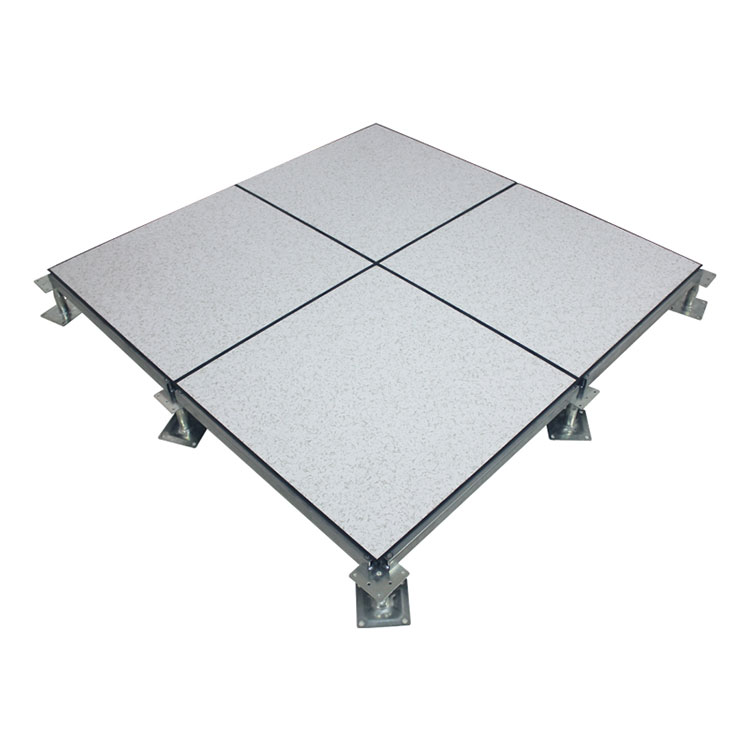
The Steel Overhead Floor from OULI addresses this through a deep-drawn steel panel structure that maximizes open space beneath the panel while maintaining extreme load capacity. Unlike flat-bottom panels that choke airflow, the patented design creates natural ventilation channels.
Why Air Distribution Parity Matters More Than Ever
With rack densities now regularly exceeding 15kW per cabinet, underfloor air distribution (UFAD) systems depend on uniform static pressure. Any section of floor with restricted airflow becomes a hot spot accelerator.
Consider two identical rows of server racks. One sits above a standard floor panel; the other above a purpose-designed Steel Overhead Active Floor. The difference shows up not just in temperature logs, but in fan speeds, energy bills, and equipment lifespan.
The Three Compatibility Checkpoints
| Checkpoint | Standard Floor Issue | OULI Steel Overhead Active Floor Solution |
| Airflow uniformity | Turbulence at panel joints | Precision-edge sealing with adjustable support grid |
| Perforation efficiency | <25% open area | Up to 50% customizable open area with anti-static coating |
| Structural deflection | Beam sag reduces plenum height | 1250+ kg concentrated load with <1mm deflection |
Real-World Validation: From Airports to Data Halls
Industry certifications tell part of the story. Operational results tell the rest. OULI's flooring has been deployed in Guangzhou Baiyun International Airport's backbone communication rooms and Hong Kong Police Headquarters' mission-critical data floors – environments where cooling failure is not an option.
One hyperscale colocation provider noted a 12% reduction in cooling fan energy consumption after retrofitting a legacy white-space hall with the OULI Steel Overhead Floor system. The reason? Consistent underfloor static pressure eliminated the need for over-specced CRAC units compensating for airflow dead zones.
Matching Performance with Fire and ESD Safety
Here's where procurement teams often get stuck: a floor can have great airflow but fail on safety. OULI's system meets both without compromise.
- Fire performance: ASTM E84-01 results show Flame Spread: 0, Smoke Density: 0
- ESD control: Surface resistance options from 10⁴ to 10⁹ Ω (conductive to static dissipative)
- Load standards: Compliant with GB/T36340-2018 and SJ/T10796-2017
The table below shows how different model ratings translate to real-world underfloor air handling:
| Model | Concentrated Load (KG) | Recommended Air Plenum Height (mm) | Typical Application |
| FS700 | ≥300 | 300-400 | Low-density IT rooms |
| FS1000 | ≥454 | 400-500 | Standard data halls |
| FS1250 | ≥567 | 450-550 | Mid-range colocation |
| FS1500 | ≥680 | 500-600 | High-density compute |
| FS2000 | ≥907 | 600+ | Hyperscale / AI clusters |
Note: Higher load capacity allows reduced beam frequency, directly improving underfloor air volume.
Common Misconceptions About Steel Panels and Airflow
Myth 1: "All steel raised floors have the same underside profile."
Reality: OULI's deep-drawn panels create a ribbed interior surface that directs air laterally, reducing pressure drop. Flat panels act like baffles.
Myth 2: "Perforated panels weaken load capacity."
Reality: With precision-engineered hole patterns and alloy cold-rolled steel (Baosteel-sourced), the FS2000 model maintains nearly 9,000N concentrated load even with high-open-area perforations.
Myth 3: "Underfloor air distribution only needs open panels, not system design."
Reality: The beams, supports, and panel edges together form the air path. OULI's screw-connected adjustable support system creates a sealed grid that minimizes bypass leakage.
Practical Steps to Audit Your Current Floor
Before planning any upgrade, walk your data center with these three checks:
1. Smoke pencil test at panel seams – Visible leakage indicates poor edge sealing
2. Underfloor pressure mapping – Variations >15% suggest airflow obstruction
3. Panel removal inspection – Look for rust, debris, or deformed stringers that narrow plenum height
Many operations teams discover that replacing only 20-30% of the worst-performing panels (typically those over high-heat rows) resolves most hot spots. OULI's modular Steel Overhead Floor series allows phased replacement without taking the entire floor offline – a practical advantage for live environments.
Why the Industry Is Moving to Integrated Air-Floor Design
Five years ago, raised floors were treated as passive structures. Today, they are active components of thermal management. Leading standards now require that access floor systems be tested for both structural and aerodynamic performance.
OULI's offering stands apart because the company holds independent intellectual property on both the load-bearing frame and the surface treatment that maintains ESD properties for the product's full lifecycle – a claim underwritten by PICC (Fortune Global 500). For facilities that cannot tolerate downtime, this reliability translates directly to operational continuity.
The Floor Is Not Just a Floor Anymore
Your data center's cooling efficiency is only as good as the air distribution path underneath. A Steel Overhead Active Floor that ignores UFAD principles will create hot spots, increase fan energy, and shorten equipment life. On the other hand, a purpose-engineered system – like the OULI series from Guangdong Huahong Raised Access Floor Co., Ltd. – turns the underfloor plenum into a precision air delivery tool, combining extreme load capacity with fire-safe, ESD-protected, airflow-optimized design. When evaluating your next infrastructure project, ask not just how much weight the floor holds, but how well it breathes.